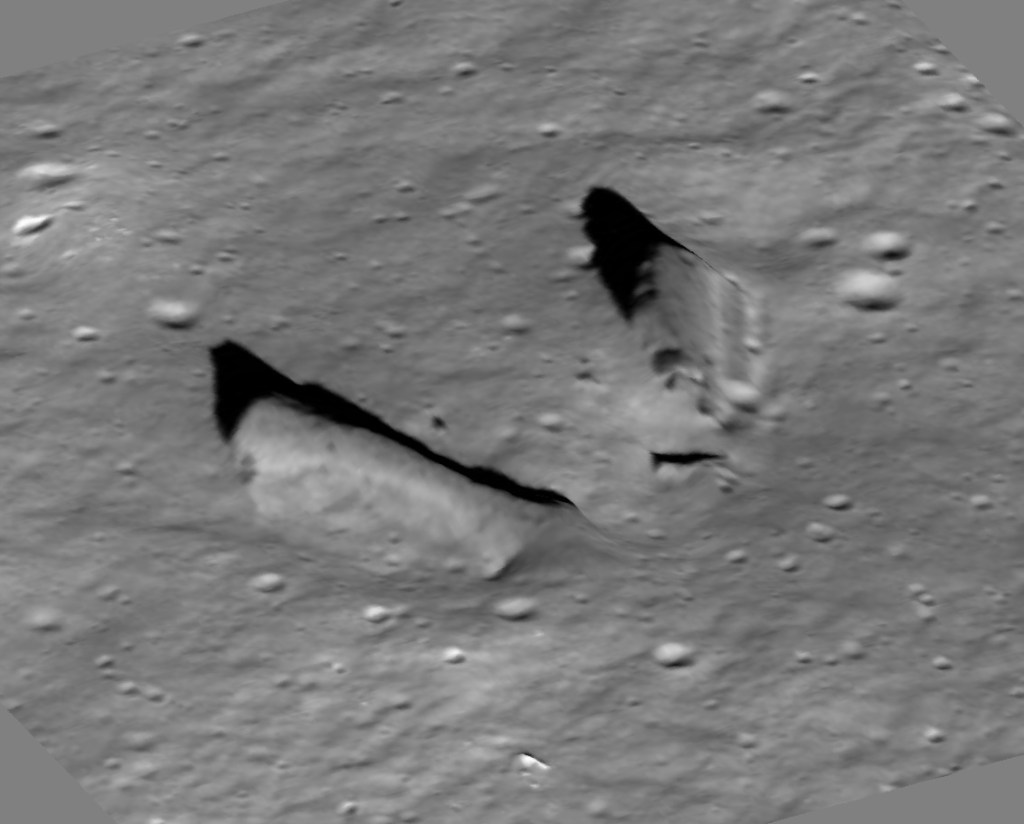
In our previous article, we examined three unusual features on the floor of Paracelsus C, an ancient crater on the far side of the Moon. Now, using images from NASA’s Lunar Reconnaissance Orbiter and reconstructed terrain models, we can take a closer look in three dimensions.
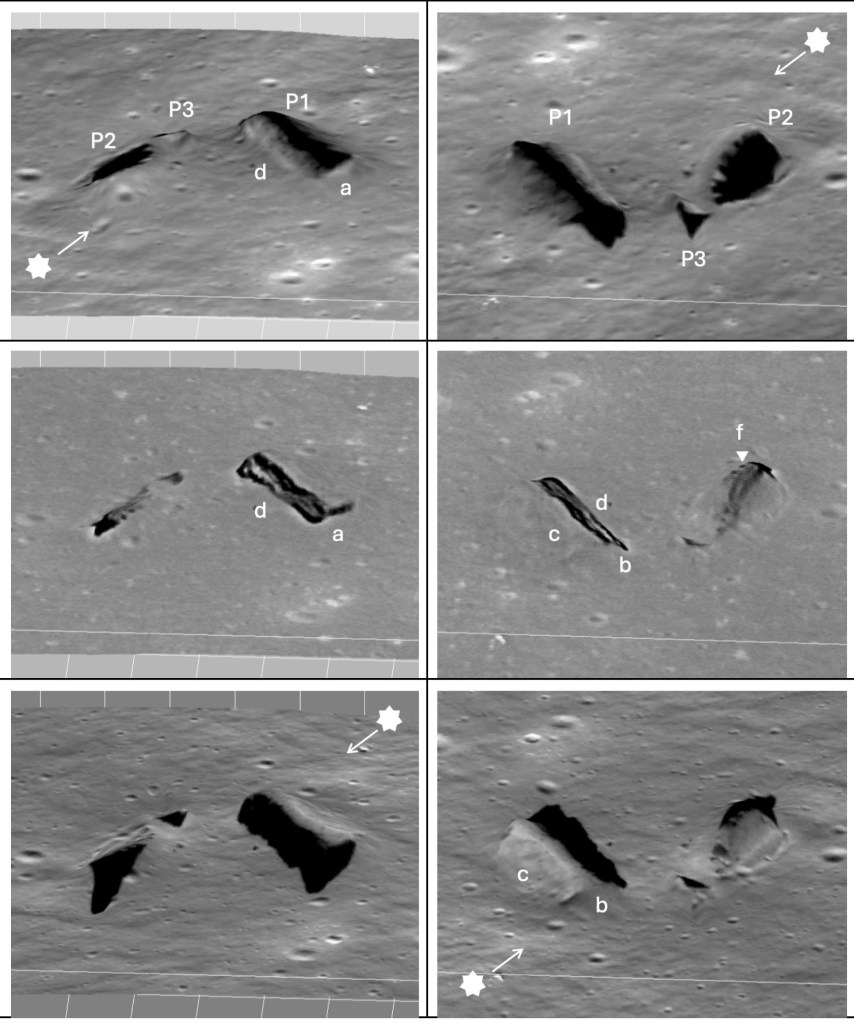
The interactive models below show the same features photographed at three different times during the lunar day. You can rotate the models, zoom in, and examine the structures from viewpoints that were never directly photographed by the spacecraft. Each lighting condition reveals something different.
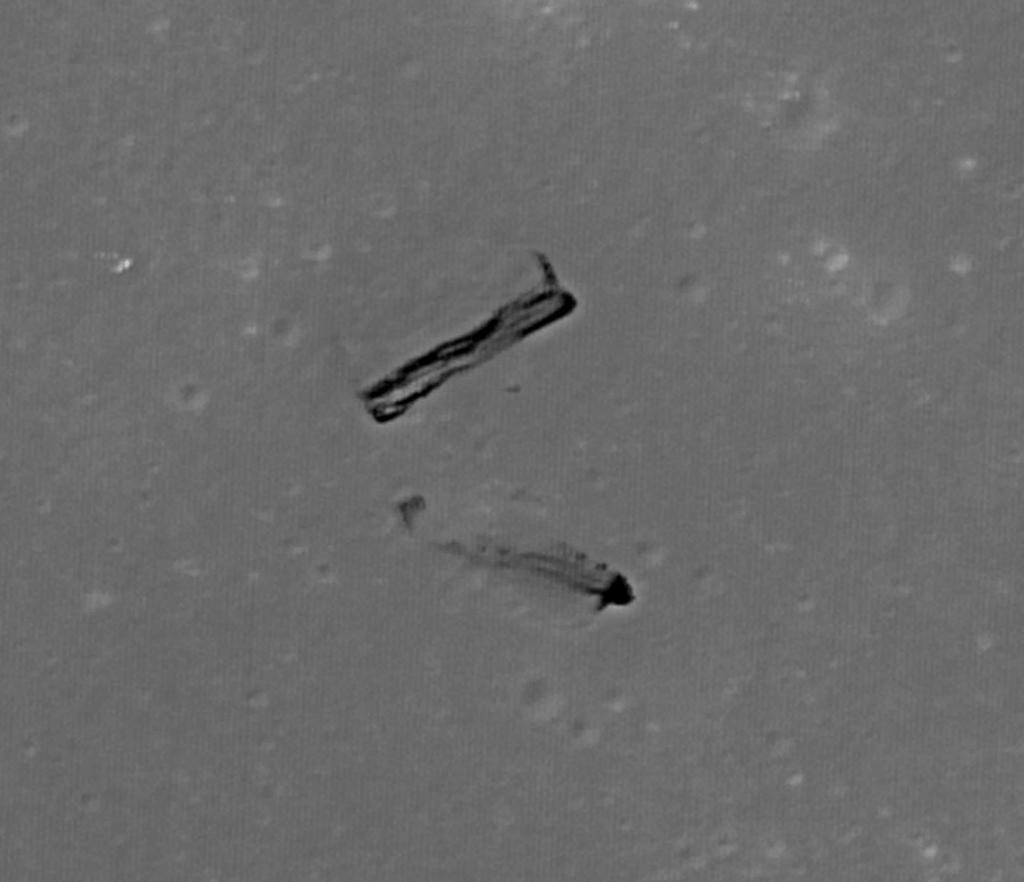
Midday — A Closer Look at the Details
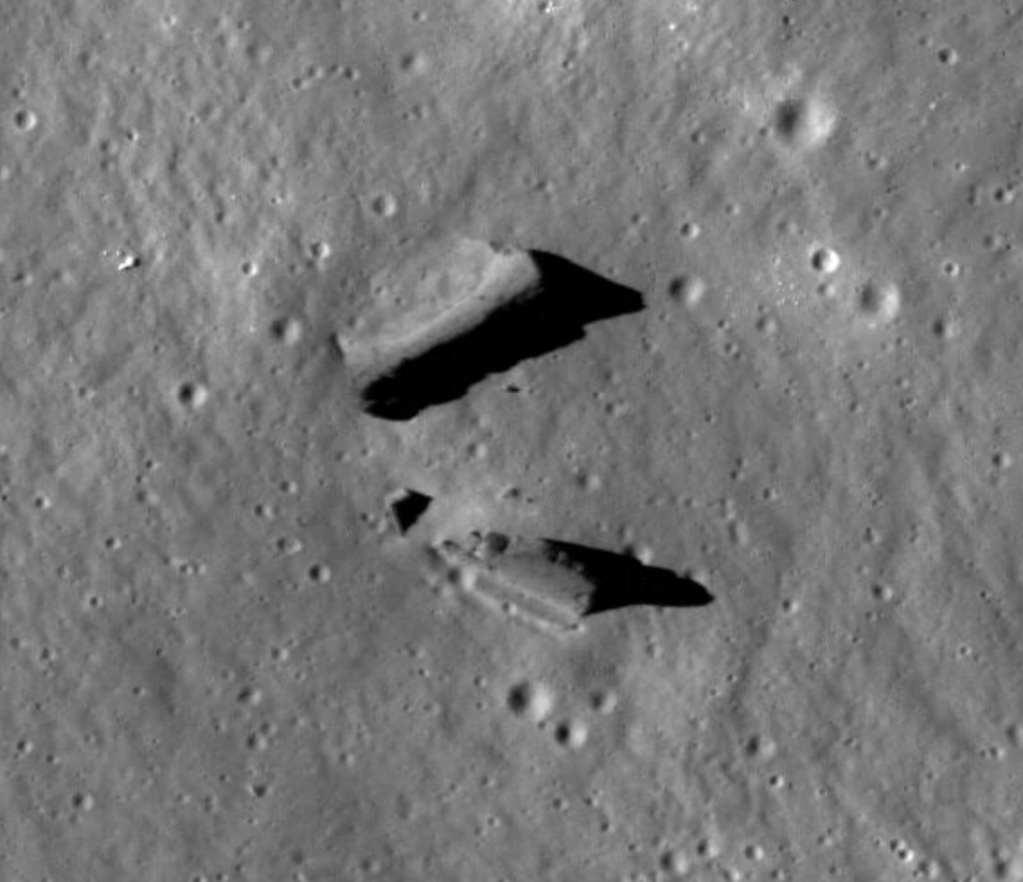
With the Sun relatively high in the lunar sky, shadows are shorter, making it easier to see details that would otherwise be hidden. The largest feature, P1, looks like an elongated block or ridge with a surprisingly different appearance on its two sides. One side has a rough, textured surface that could be exposed rock, while the other looks much smoother, perhaps because it is partly covered by lunar soil. The second feature, P2, is particularly interesting. Along its top are faint lines or ridges that give it an almost layered appearance. Several small circular depressions are also visible. Are these simply unusual rock formations, or do they tell us something about how these features formed? The midday view provides some intriguing clues.
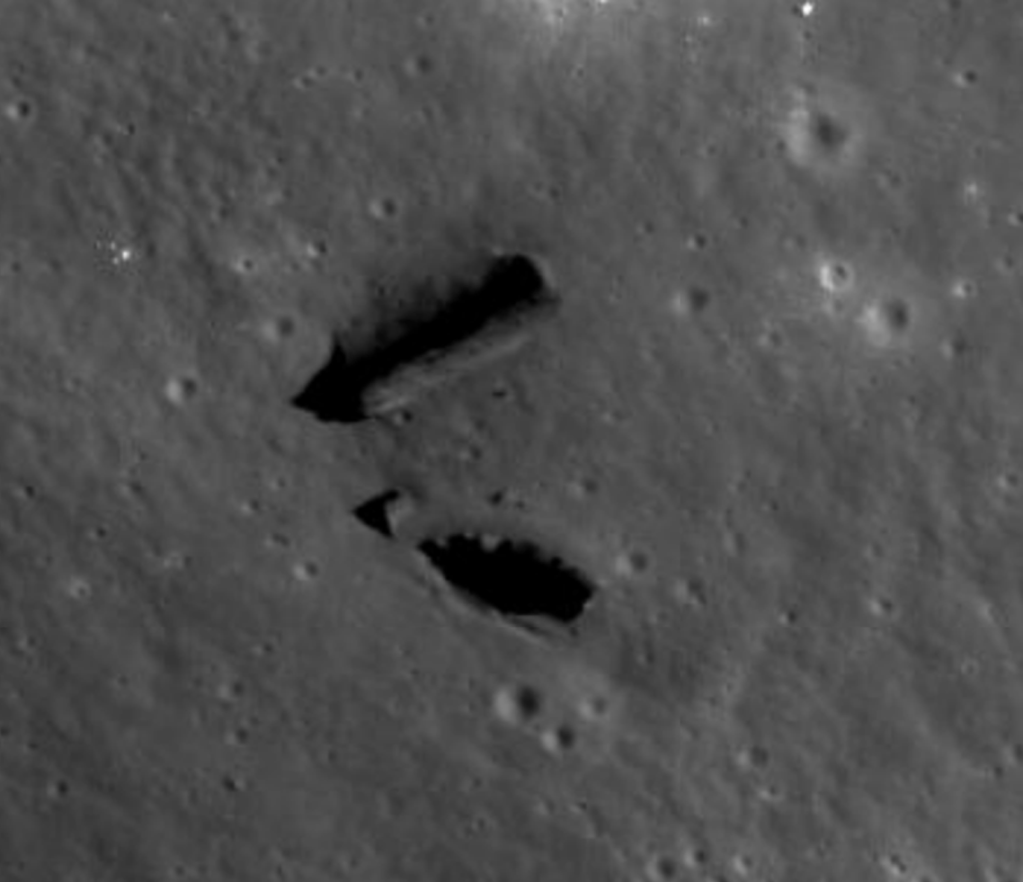
Morning — Shapes Emerging from the Shadows
When the Sun is lower in the morning sky, the longer shadows bring out the overall shapes of the features. P1 stands out as a long, steep-sided structure rising above the surrounding terrain. Its sharp edges and relatively narrow top are especially striking when viewed from different directions. P2 is more difficult to examine because much of it lies in shadow. But look carefully along the edge of that shadow. Instead of a smooth outline, there are small bumps and irregularities that seem to correspond to the textured features visible in the midday model. The smaller third feature, P3, also becomes more apparent. Seen together, these three structures form an unusual grouping in an otherwise relatively smooth landscape.
Afternoon — A Different Perspective
By afternoon, the Sun has moved to the opposite side of the sky and is much lower, casting deep shadows that dramatically change the appearance of the terrain. Now we get a better view of the ends and sides that were less visible earlier in the day. P1 looks particularly prominent, with steep faces and a sharply defined outline. P2 also reveals something unusual: a short, straight depression running along one side, resembling a small trench or groove. There is even a tiny impact crater nearby, yet the linear feature appears to have survived. These details raise an interesting question. How have such small surface features remained recognizable in a landscape exposed to billions of years of lunar impacts and space weathering? Comparing all three models helps us appreciate both the unusual geometry of these structures and the mystery of how they came to be.
Different lighting reveals different details, but even when we can examine these structures in three dimensions, their origin remains uncertain.


Leave a Reply