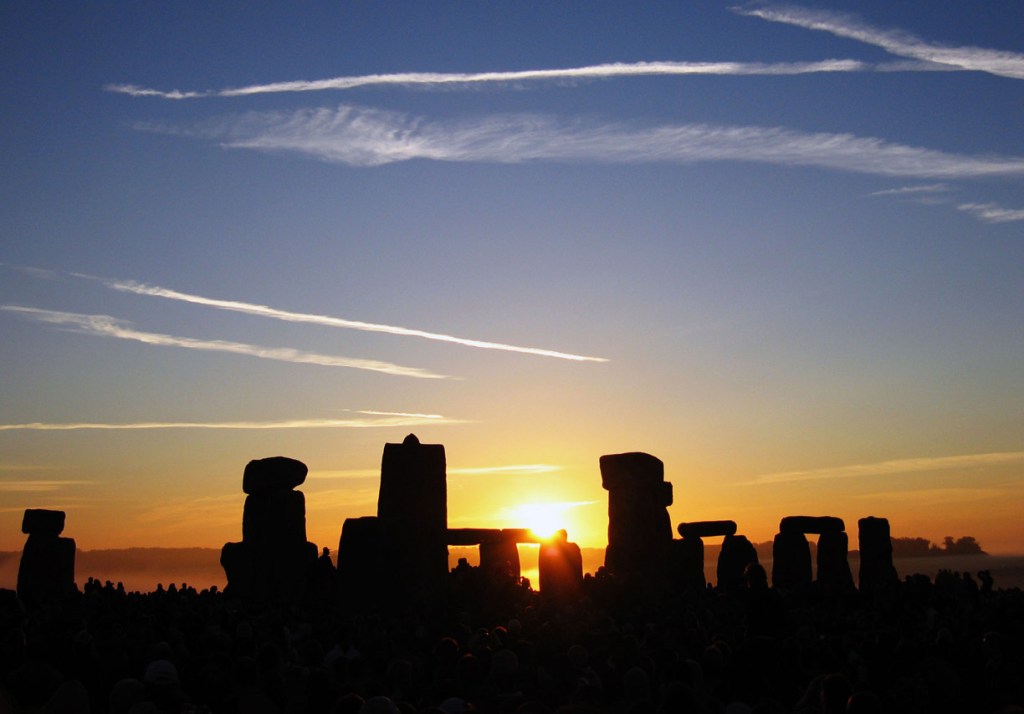
Historically, certain directions have special significance and may be considered auspicious, even sacred. For thousands of years these directions, which include north, south, east, and west – the cardinal directions, the directions in which the sun rises and sets on the summer and winter solstices, and the directions of extreme motion of the moon (lunar standstills), have influenced the design and alignment of churches, temples, cities, and other places of importance throughout the world.
Sacred Directions is a Mac OS archaeoastronomy app that displays these directions on a satellite image at any location to understand sites in terms of their relation to the heavens and to other places on Earth.
The following video provides a quick overview of the app and its use.
App Description
Go to any location on Earth by entering its latitude and longitude. Let’s go to a well-known place: the Giza plateau in Egypt. As shown below, the pyramids are aligned N-S-E-W to the cardinal directions.

Besides the cardinal directions, Sacred Directions displays sunrise and sunset directions on the summer and winter solstices, moonrise and moonset directions during major and minor lunar standstills, and sunrise/sunset directions on days when the sun passes directly overhead (zenith passages) at locations within the zone of the tropics.
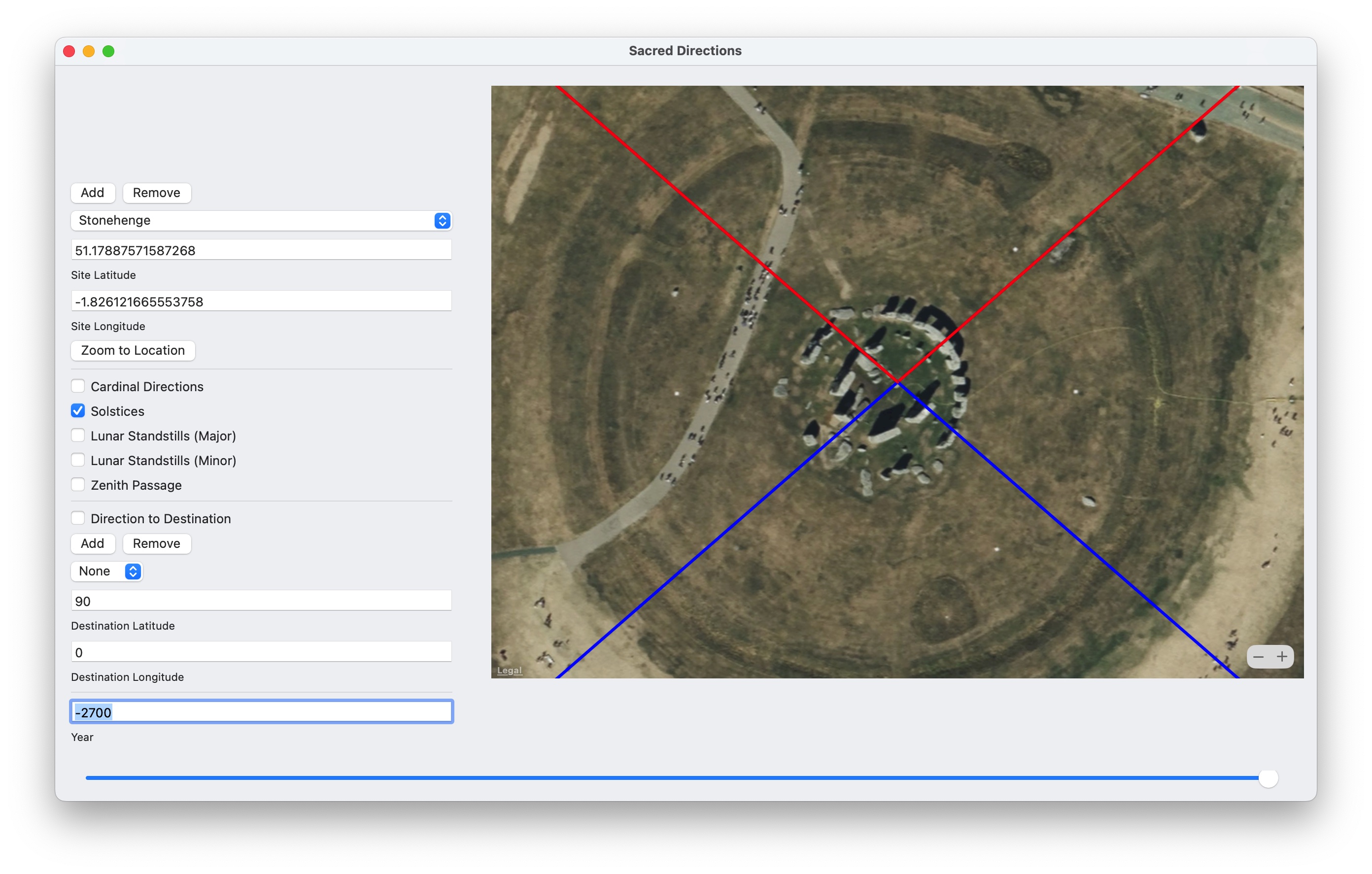
A time slider shows how solar alignments change as Earth’s obliquity varies over a 41,000-year cycle – a phenomenon that can be exploited in archaeoastronomy to date a site based on its alignment with the sun. This is illustrated in the following example which shows how the app can be used to date parts of Stonehenge. A line from the center of the circle passing through the heel stone marks the summer solstice sunrise direction. Today, the sun rises slightly south of the heel stone. Changing the time reference to -2700 or 2700 BCE moves this line slightly northward to where it would have risen directly over the heel stone at the time that part of the monument is thought to have been constructed.

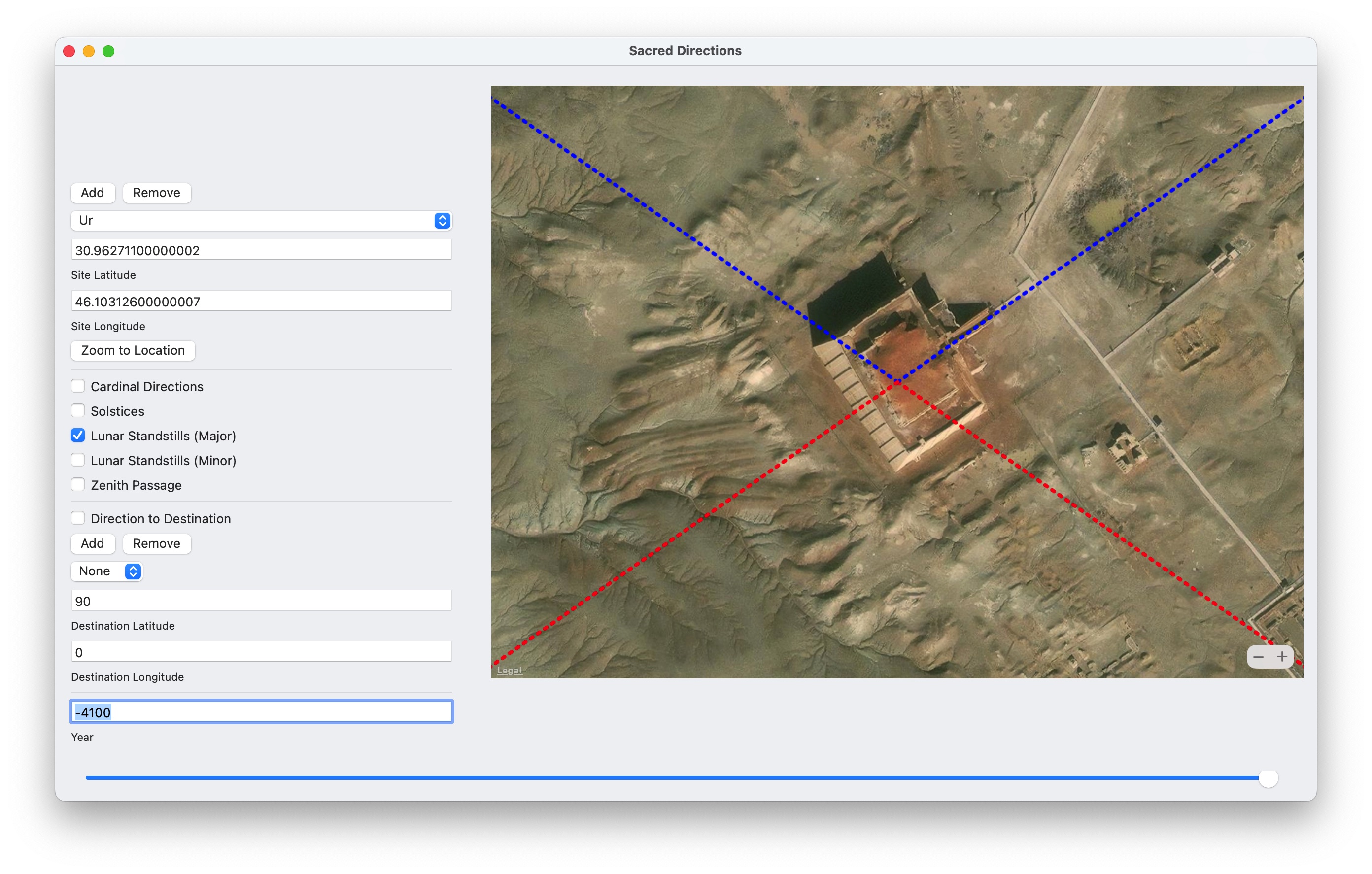
The Ziggurat of Ur is believed to have been dedicated to the Mesopotamian moon god Nanna. The following example shows that it is aligned to major lunar standstills – the most northerly direction the moon rises (and sets) over its 18.6-year-long cycle.
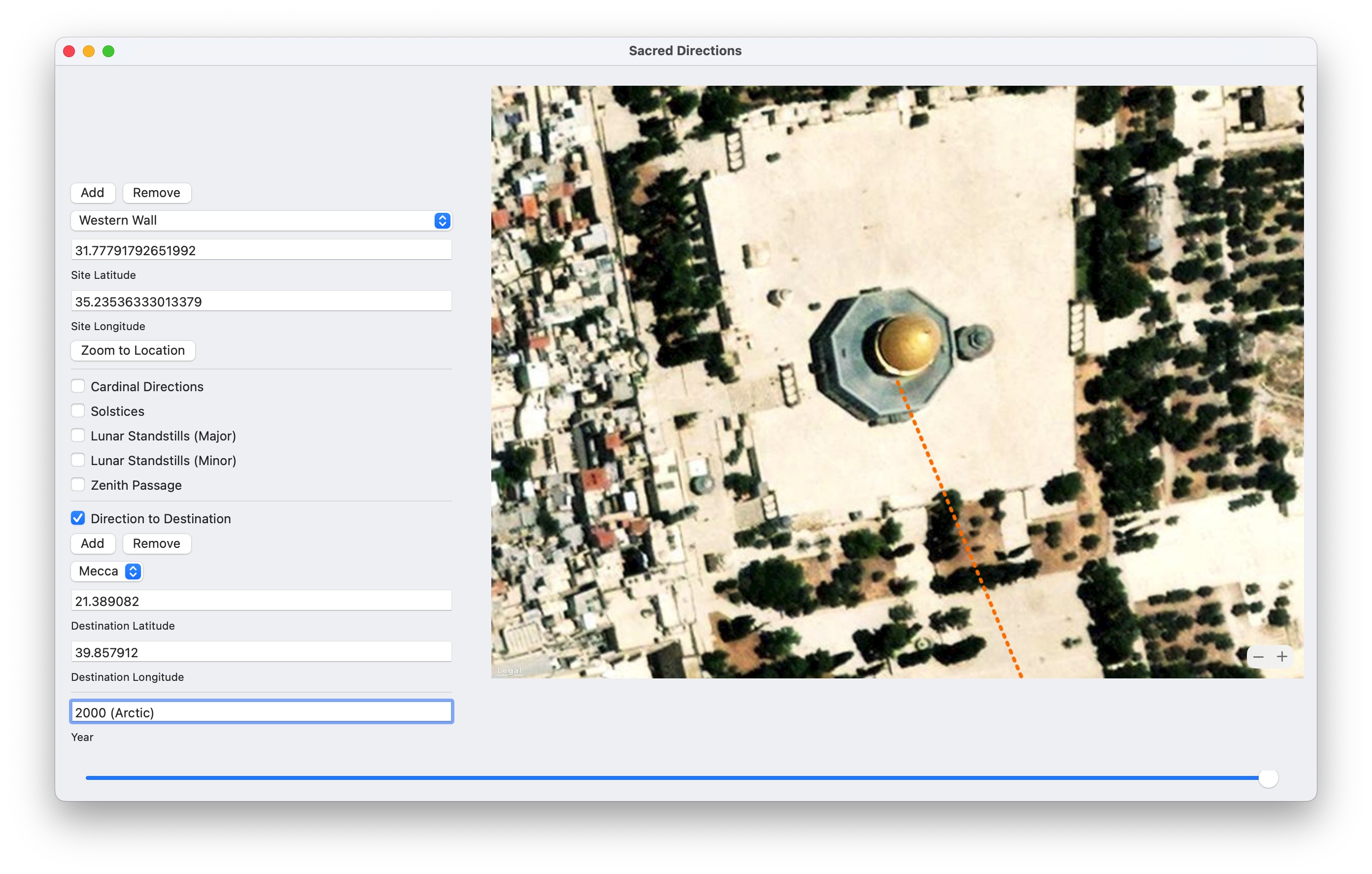
Some sites point to geographic locations such as Mecca, Cuzco, and other centers having historical and perhaps even pre-historical significance. For example, mosques are often aligned in the direction of Mecca. The following example reveals the surprising result that the Temple Mount in Jerusalem is not aligned to Mecca but to Petra.

Like many of my apps, I developed Sacred Directions because nothing like it existed in the marketplace. I have used it extensively in analyzing the alignment of ancient sites throughout the world. In the process, I have found that about half of the sites I examined do not appear to be oriented in any known direction. Geographical as well as astronomical directions are defined relative to the geographic poles. Using Sacred Directions I have determined that most of the unexplained sites seem to be aligned to four previous locations of the North Pole – a controversial idea discussed in my book Before Atlantis. Four of the hundreds of sites discussed in the sequel Beyond Atlantis are shown below.
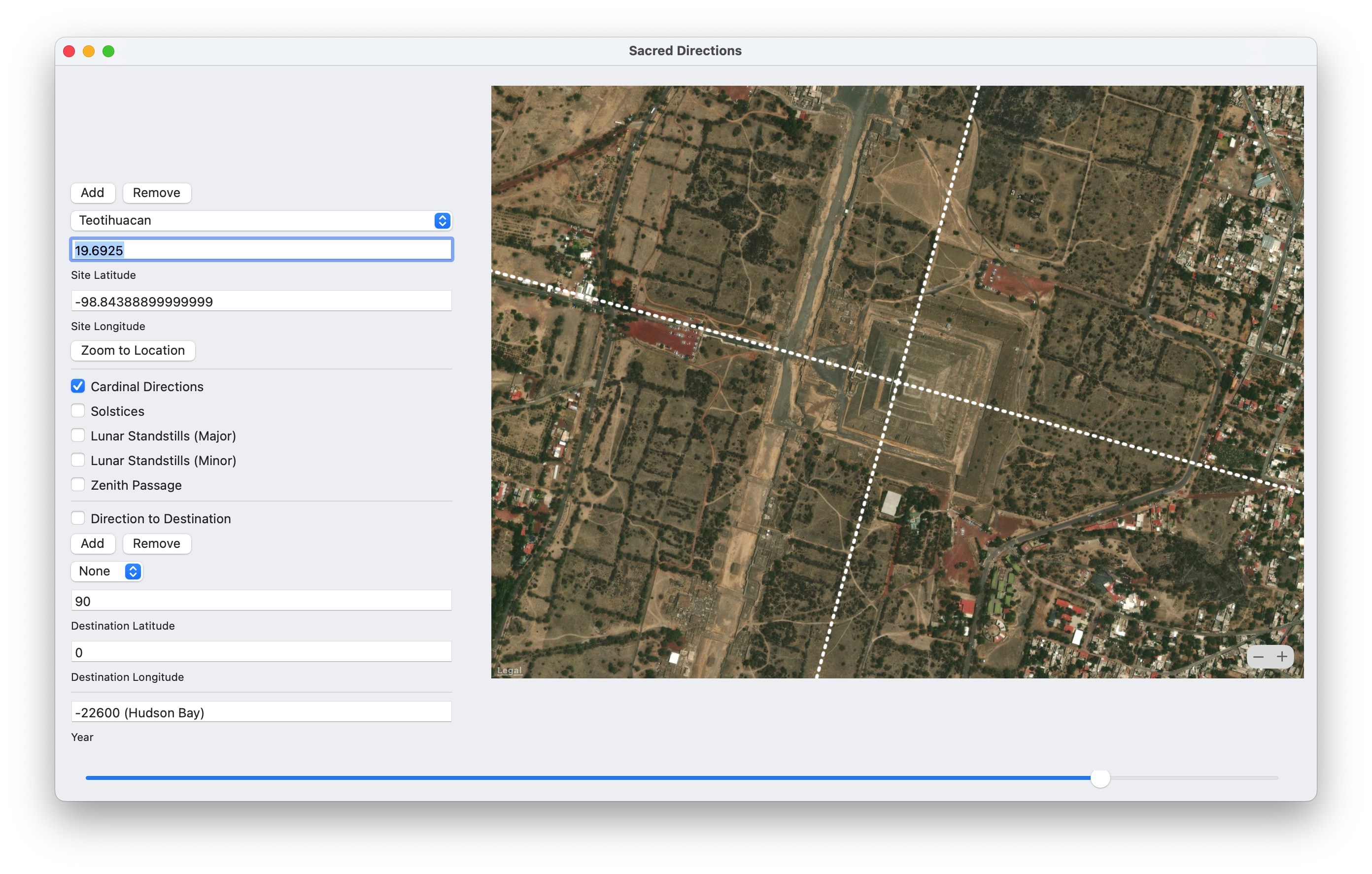
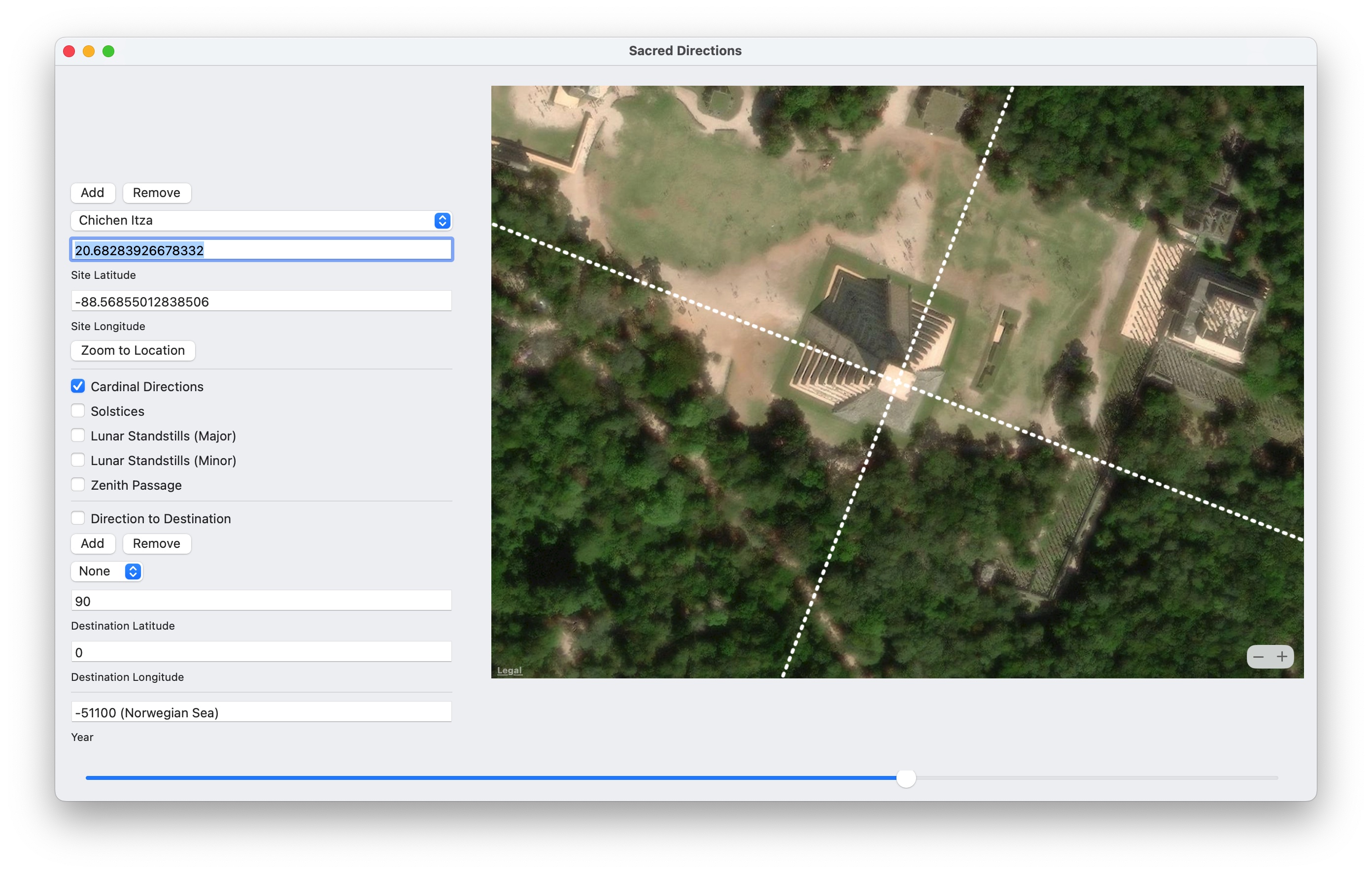

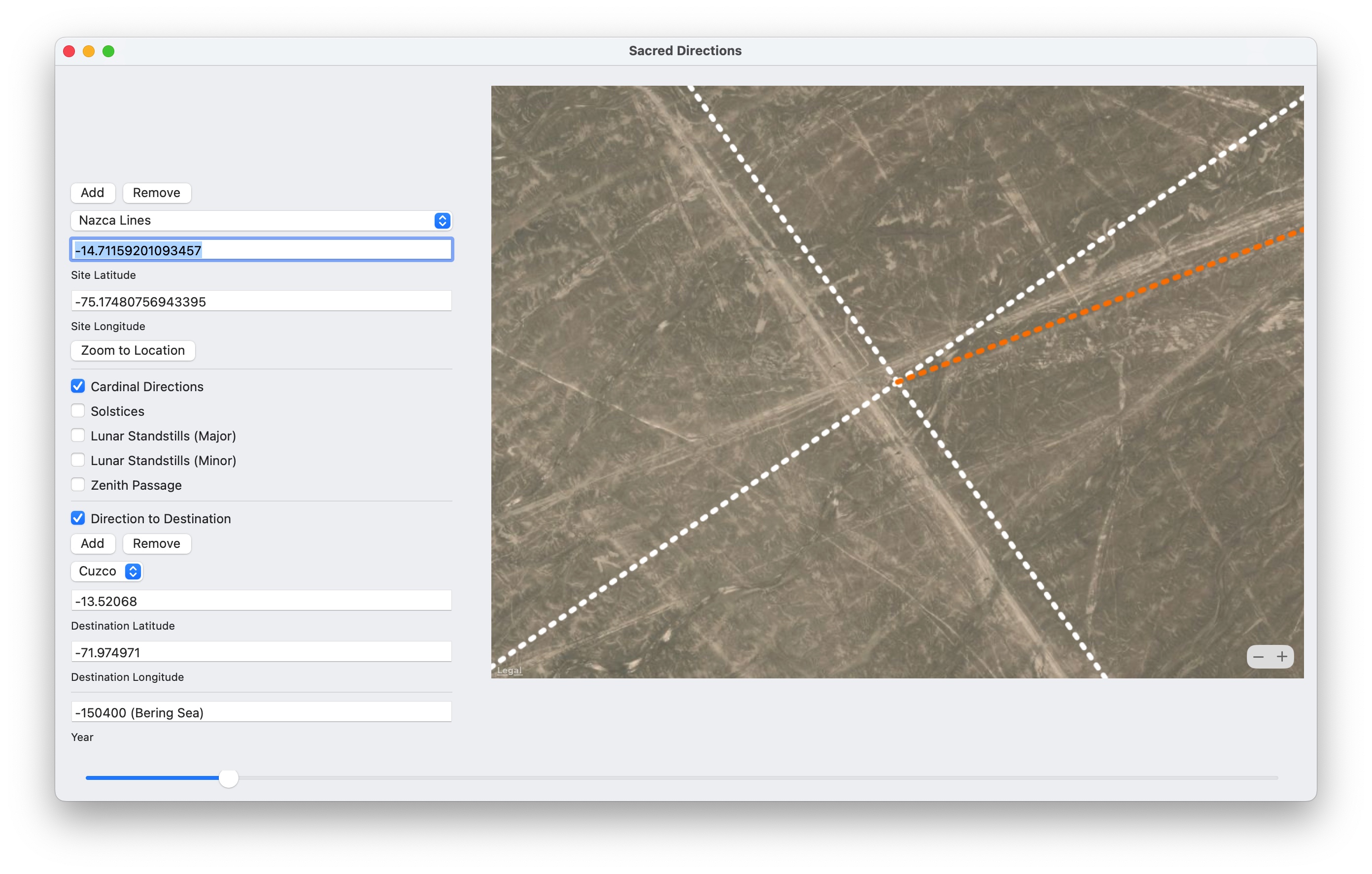
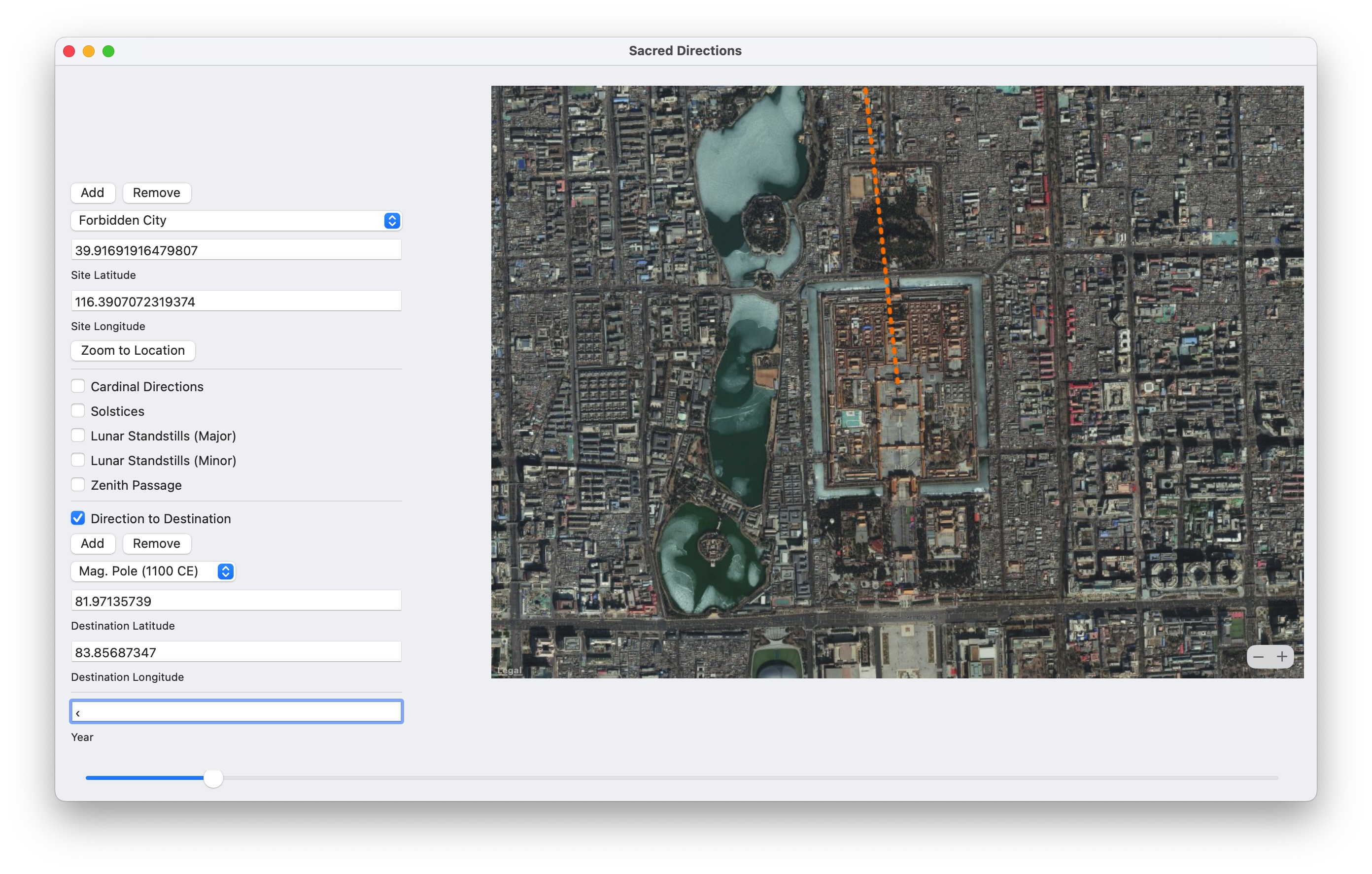
Numerous sites in China were aligned to geomagnetic north at the time of construction. One example is the Forbidden City which was built between 1100 and 1200 CE. Instead of using the time slider to change the geographic pole reference as above, alignments to older geomagnetic pole locations are stored in a destinations file that can be downloaded below.

Sacred Directions comes preloaded with more than eighty ancient sites. Other locations can also be loaded from tab-delimited text files. This is a site file created from data downloaded from the Ancient Locations website:
This is a destination file containing geomagnetic pole locations over the past 4,000 years:
Click here for more information on archaeoastronomy and related research.
Feature image at the top of the article courtesy Andrew Dunn/Creative Commons.
 markcarlotto.com
Leave a comment