Unlike most people, when I first moved to Cape Ann, I was attracted to Dogtown and its forested interior, not the coastline. I applied my knowledge of satellite imaging and GPS mapping with an interest in local history to create maps that tied the history of Dogtown and other places to what we see today – to the current landscape. At one of our annual Dogtown Days events, someone asked me if this same technology could be applied to what is around Cape Ann, namely the ocean.
At around this time, a new start-up called Gloucester Innovation founded by an old colleague of mine was exploring ways in which citizen science using low-cost computers and sensors could help to address problems such as the over-regulation of the fishing industry, decrease in the lobster population, ocean pollution, and others.
AquiPod
At this point in my career, I was moonlighting as an iPhone app developer. Where others in Gloucester Innovation were designing and building special-purpose hardware to do things like detect ocean plastics, measure temperature, count fish, etc., I thought of simply putting an iPhone in a watertight container to collect data underwater. After all, the iPhone was a computer with a camera, microphone, and other sensors so why not simply develop an app to do what is needed?

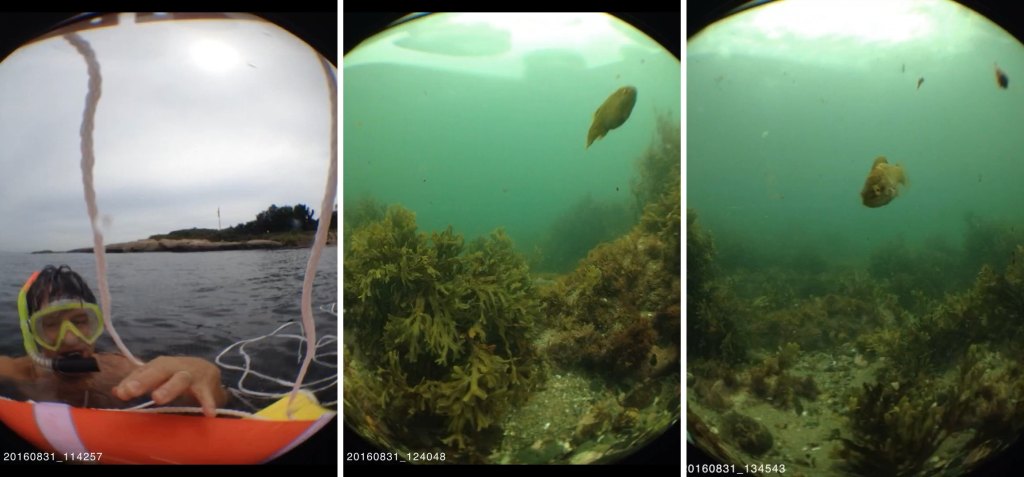
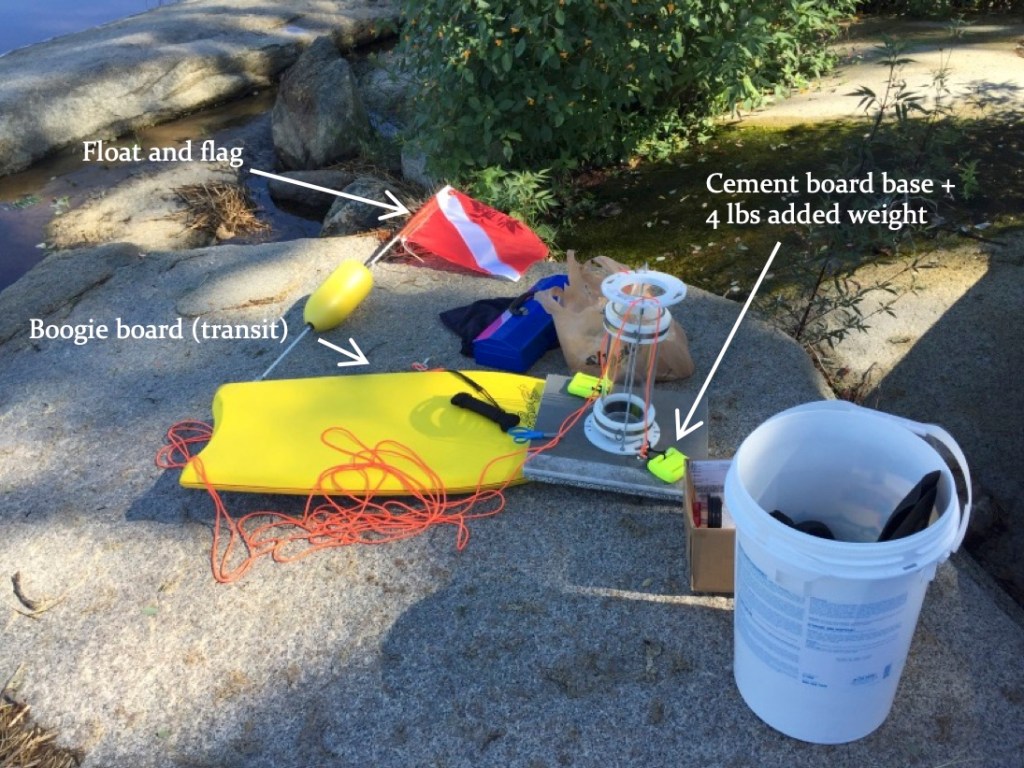
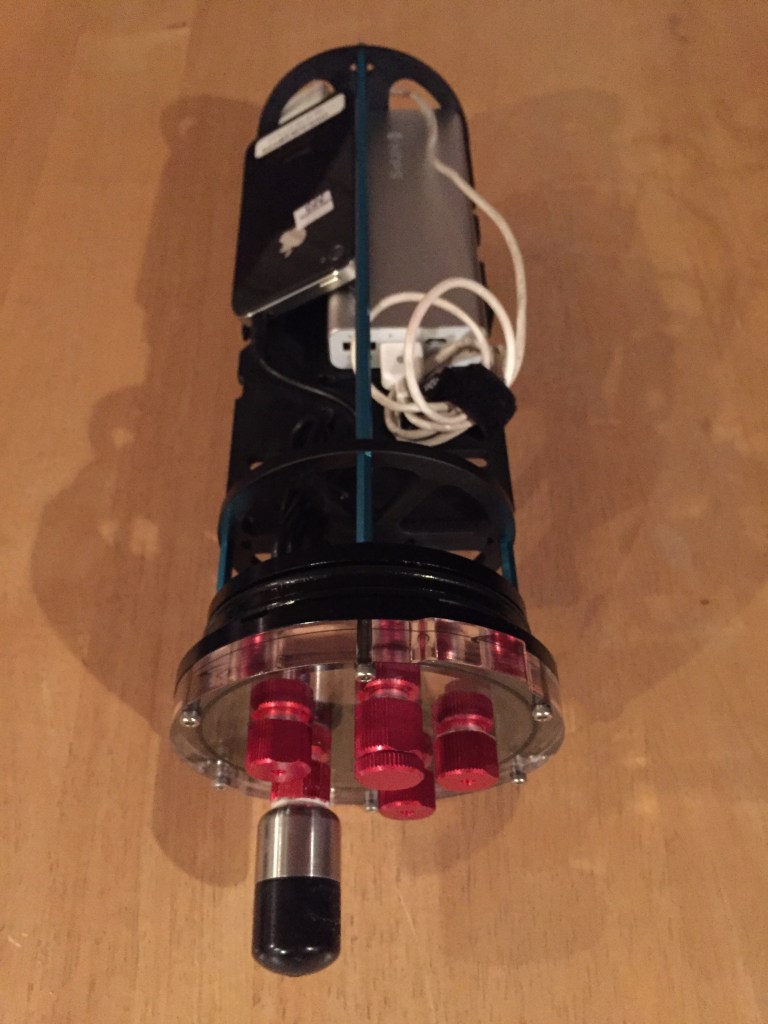
I tested a prototype of what I called an AquiPod consisting of an iPhone 4 and an external battery in a Blue Robotics 4-inch watertight enclosure at Flat Rocks in mid-summer 2015. The app was designed to collect time-lapse photos over an extended period of time, from hours to days, depending on battery life. After setting the iPhone not to go to sleep, I launched the app, placed the iPhone in the watertight container, closed the container, floated the AquiPod on a boogie board off-shore, and lowered it to the bottom. Four hours later I retrieved it, opened up the container, and downloaded a video. Although it didn’t show much, the watertight container did not fill with water, the iPhone did not overheat, and the app worked.


Being in the inter-tidal zone, the Flat Rocks video doesn’t show much activity. The next two deployments were at Ocean Alliance in the old Paint Factory at Gloucester Harbor. The first one during the day caught snails and crabs moving on the bottom. In a second collection overnight I hoped to capture activity from just before sunset to just after sunrise on the following day. A few fish were seen early in the morning.
The next deployment at Plum Cove, which was further off-shore, captured a lot of interesting activity including a skate chasing another fish.

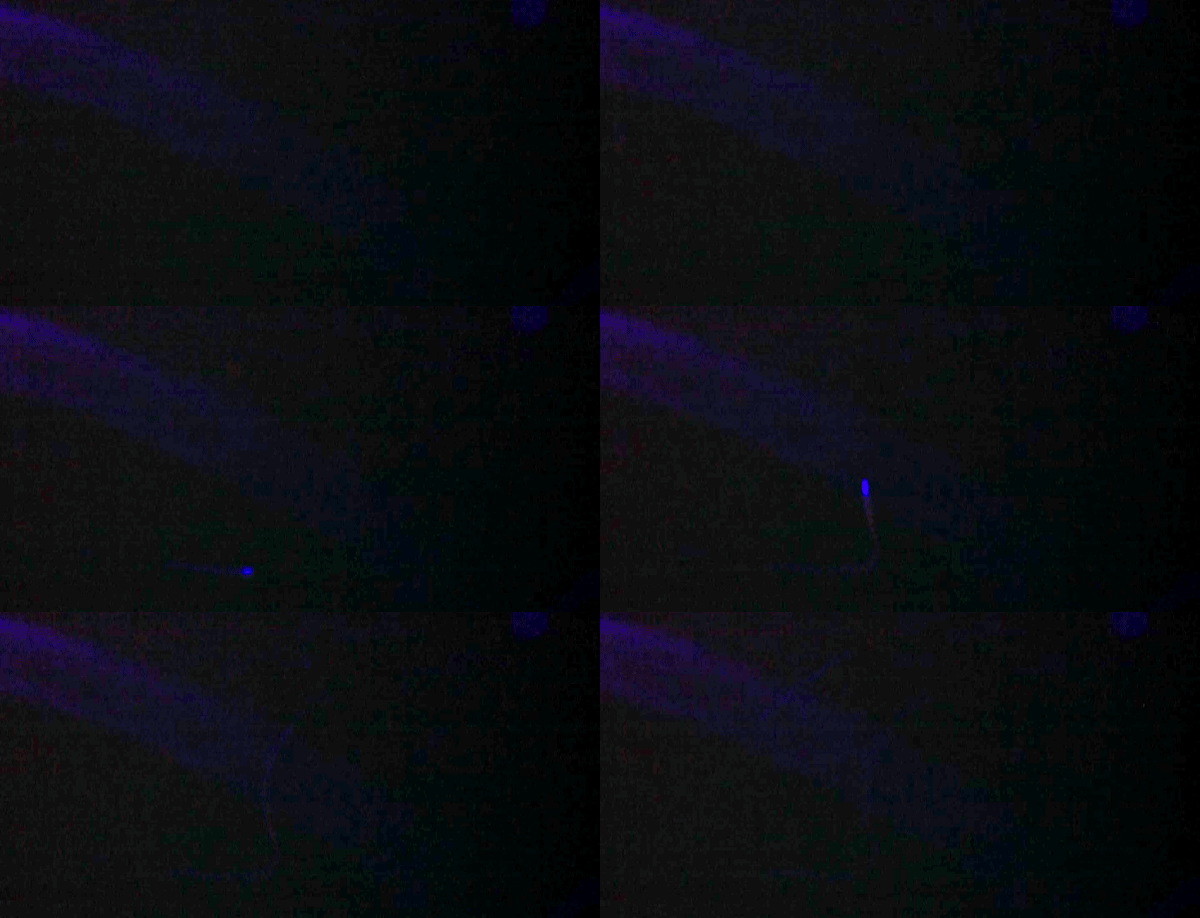
Two more deployments in September 2015 caught images of plastics in the water and small sea creatures at Lane’s Cove. One video at night shows something moving in UV light.
Summer Intern
With the help of an intern A.J. Marcinek from Endicott College the following summer a number of collections were made around the Cape and North Shore. Using a smaller version of the AquiPod (AquiPod Lite) consisting of an iPhone in a commercially available watertight case plus a five-pound anchor, A.J. captured videos of fish, crabs, and other sea life close to shore.

Two AquiPod collections in Whale Cove and Folly Cove were among the most interesting of the summer. The deployment in Folly Cove was about 40 meters offshore at high tide in water 10-15 meters deep. Striped bass, skate, and green crabs were among the stars of the show.

Babson Foundation Grant
In 2016, Gloucester Innovation was awarded a $4000 grant by the Paul and Edith Babson Foundation to create an Ocean Maker’s Space at Maritime Gloucester. Two AquiPods and two AquiPod Lites were developed and deployed in 2017.




The video below was taken in the Summer of 2017 below the pier at Maritime Gloucester using one of the AquiPods.
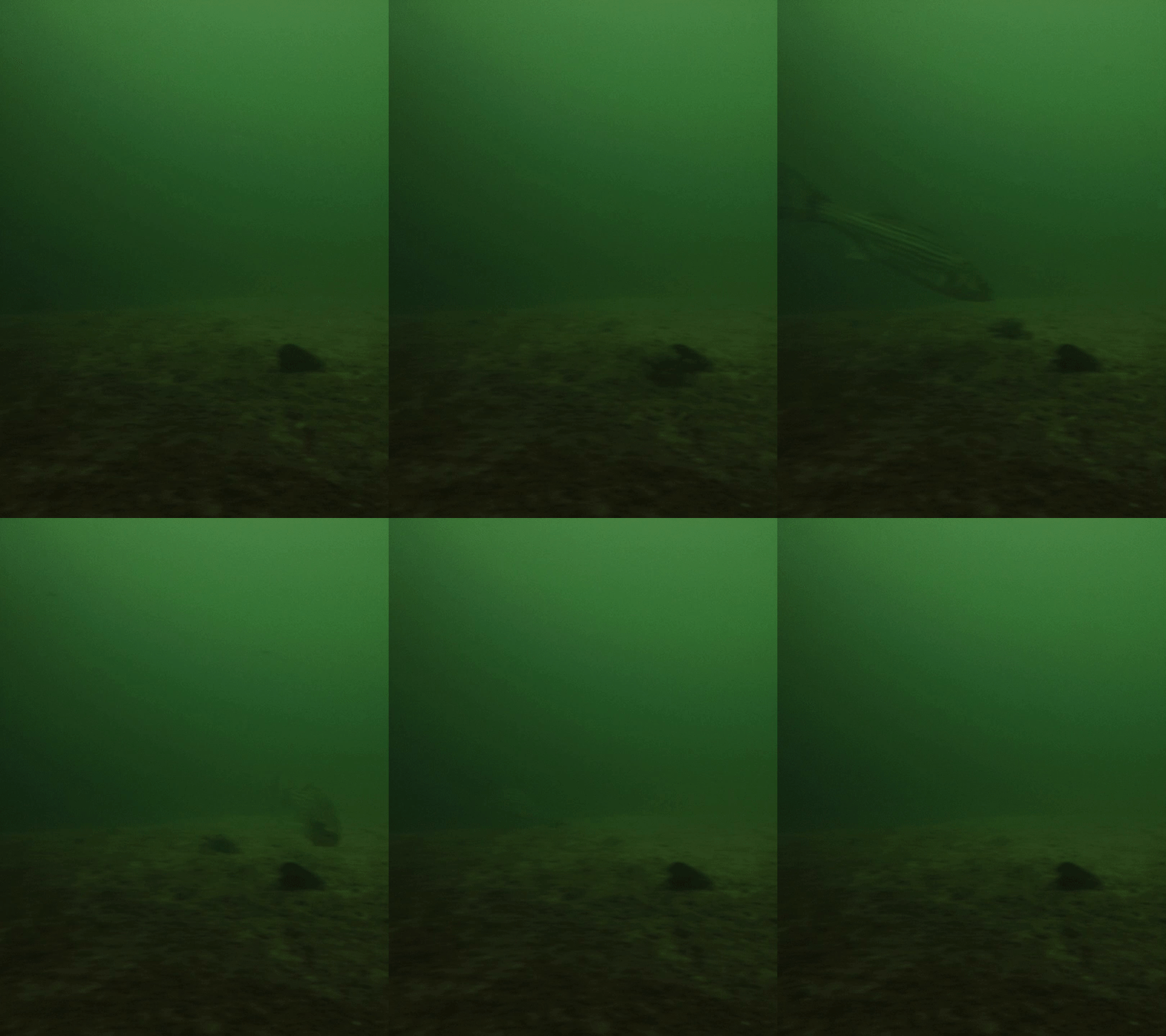
Although the concept is a simple one, viewing these long-duration time-lapse videos gives one an appreciation for life at the bottom of the sea, here along the coastline of Cape Ann.
 markcarlotto.com
Leave a comment